SUMMER · JUNE 11, 2026 · WEEK 23
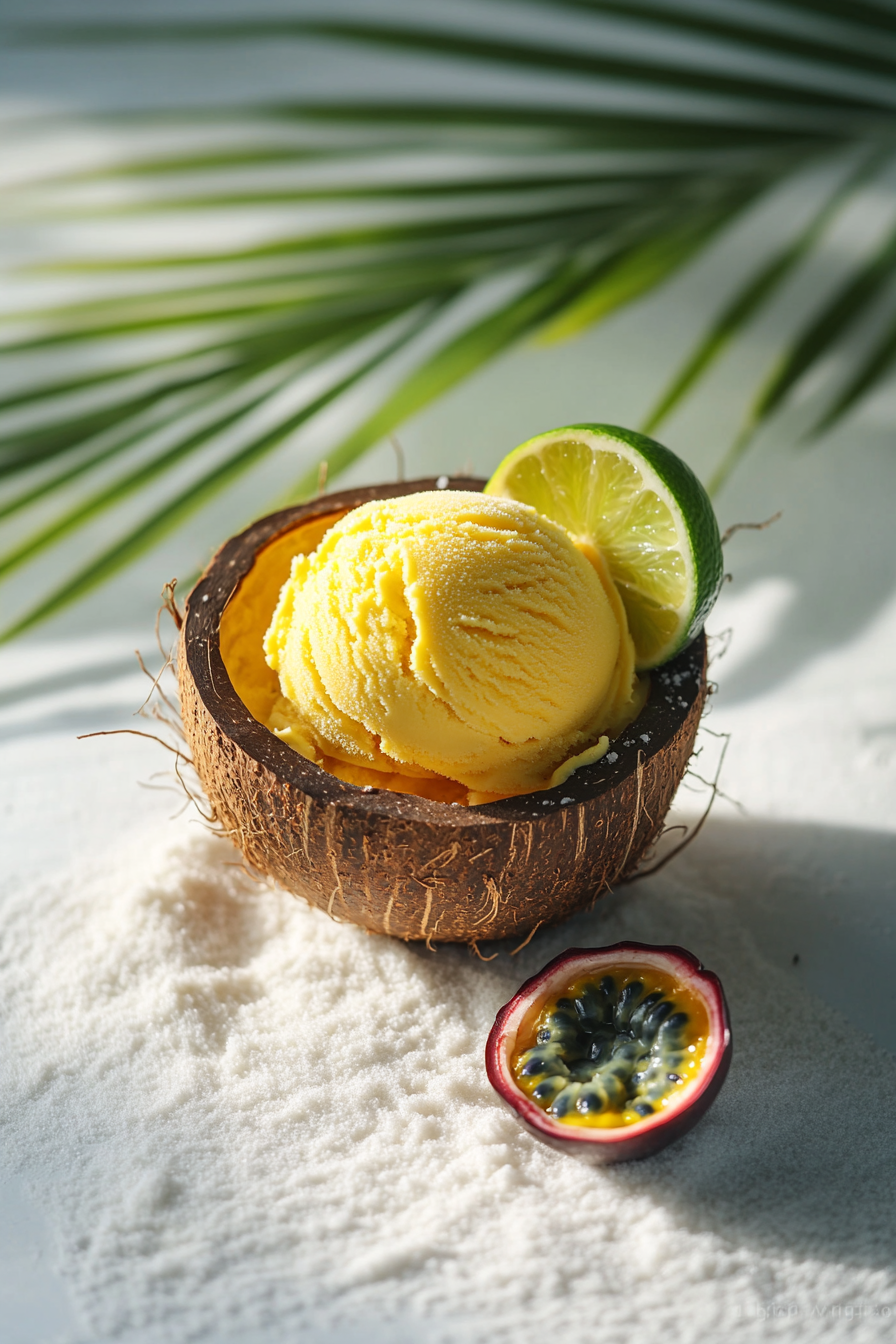
Cachaça’s grassy bite against tart passion fruit custard, with lime keeping the edges sharp: the batida de maracujá, frozen.
This cachaça passion fruit ice cream recipe converts the batida de maracujá, Brazil’s blended beach cocktail, into a frozen custard. The custard cooks fully before the passion fruit goes in, which protects the eggs from the puree’s acid, and the lime is held to a single tablespoon so the fruit’s natural tartness carries the balance. Three machine methods, gram-precise, built for people who take Brazilian spirits seriously.
For the science behind how cachaça interacts with a frozen custard base, see our complete guide to alcohol in ice cream. For freezing points across the full spirit shelf, see the alcohol freezing point chart.
Why Cachaça Works in Ice Cream
Passion fruit brings two problems and one gift. The problems are water and acid: the puree thins the base, and its acidity is high enough to threaten a custard if it meets hot eggs. The gift is an aroma that survives freezing better than almost any tropical fruit. So the custard cooks completely before the puree touches it, and the fruit goes in off the heat, which protects both the eggs and the aroma. The cachaça dose stays conservative because its job here is the grassy sugarcane note, not freeze suppression. The fruit’s own sugars and the dairy carry the texture.
What You’ll Taste
Tart hits first. Passion fruit runs brighter than mango or pineapple, closer to citrus than anything creamy, and the custard fat rounds it without burying it. The cachaça arrives in the finish as something green and faintly funky, the note that tells you this is sugarcane spirit and not rum. Lime stays in the background where it belongs, sharpening the fruit rather than competing with it.